Few cookware brands are as recognizable as Le Creuset. Known for its enameled cast iron, bold color palette, and lasting performance, the brand has become a fixture in kitchens around the world. That reputation, however, was built slowly, beginning with a single foundry in northern France.
The Beginning: 1925 in Fresnoy-le-Grand
Le Creuset was founded in 1925 in Fresnoy-le-Grand, France, a region with a long history of ironworking. The company was established by two Belgian industrialists whose skills complemented each other. Armand Desaegher specialized in cast iron, while Octave Aubecq was an expert in vitreous enamel.
Their collaboration led to the creation of enameled cast iron cookware, combining the heat retention and durability of cast iron with a smooth, protective enamel coating. This approach was innovative at the time and helped distinguish Le Creuset from more utilitarian cookware brands.
The name “Le Creuset” translates to “the crucible,” a reference to the vessel used to melt metal and a nod to the brand’s manufacturing roots.
The First Cocotte and an Iconic Color
The company’s first product was a cocotte, also known as a Dutch oven. Introduced in 1925, it remains one of Le Creuset’s most recognizable and best-known pieces.
From the start, the cookware featured a vibrant orange enamel inspired by the color of molten cast iron as it emerges from the furnace. Known today as Flame, this color set Le Creuset apart visually and became a defining element of the brand’s identity.
At a time when most cookware was designed to be purely functional, Le Creuset embraced the idea that kitchen tools could be both practical and visually distinctive.
Craftsmanship and Manufacturing
Le Creuset’s production process has remained largely consistent over the decades. Each cast iron piece is made using a sand mold that is destroyed after a single use, meaning no two pieces are exactly alike.
Multiple layers of enamel are applied and fired at high temperatures, creating a durable surface that resists staining, chipping, and rust. Many of the brand’s cast iron products are still manufactured in the original French foundry, reinforcing Le Creuset’s reputation for quality and craftsmanship.
This emphasis on careful production has helped the brand maintain consistent standards across generations of cookware.
Growth and Product Expansion
As Le Creuset gained recognition, the company expanded beyond enameled cast iron. Over time, its product offerings grew to include stoneware, stainless steel cookware, enamel-on-steel items, and a wide range of kitchen tools and accessories.
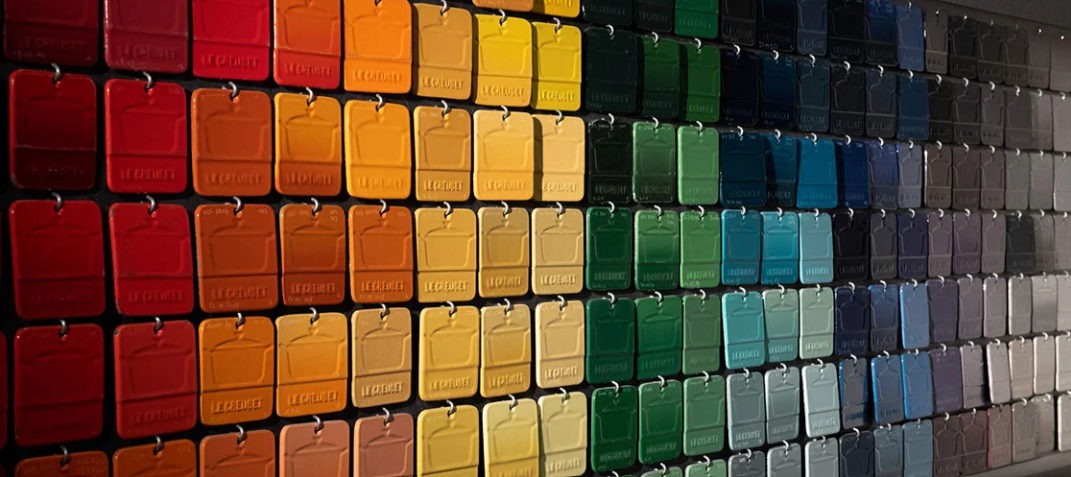
Color also became an increasingly important part of the brand. While Flame remains iconic, Le Creuset introduced a broad palette of additional colors, allowing customers to choose pieces that suit their kitchens while maintaining the brand’s cohesive look.
Global Reach and Long-Term Appeal
Le Creuset expanded internationally during the mid-20th century and developed a strong presence in the United States. Its appeal crossed generations, attracting professional chefs, serious home cooks, and first-time buyers alike.
Rather than following short-term trends, the brand built its reputation on consistency. The core values of durability, performance, and design have remained unchanged, even as the product line evolved.
Many Le Creuset pieces are used for decades, often passed down within families. That longevity has become a defining part of the brand’s story.
Why Le Creuset Still Matters
In an era of mass production and disposable goods, Le Creuset stands out for its long-term approach. The cookware is designed to be used regularly, cared for properly, and kept for years.
For retailers and sales representatives, the brand’s history adds real value. Customers are not simply purchasing cookware. They are investing in a product backed by nearly a century of experience, craftsmanship, and trust.
A Legacy Approaching a Century
As Le Creuset approaches its 100-year milestone, the brand remains closely tied to the principles established in 1925. From its first cocotte to its global presence today, Le Creuset’s success is rooted in a clear identity and a commitment to quality that has endured for generations.

